
Category: Bees

-

The Bee Law in PA
The 1994 bee law allows unlimited apiary registration for $10 every 2 years. The proposed SB1198 law would significantly increase fees for beekeepers. Despite uncertainties, the investment in plant and pollinator monitoring is seen as crucial for the industry’s sustainability.
-

Pennsylvania Beekeepers Arise and Unite!
The 2023-2024 US Beekeeping Survey is Live! Go to: https://aub.ie/colonysurvey Apparently a courageous three dozen or so beekeepers from PA have stepped up to their duty to provide DATA. We must all join these few, proud, committed bee heroes and provide our DATA as well! Onward to the pure land where even more than one third…
-

Please Lobby for Reality Based Beekeeping Miticide Regulation
The Guild is sharing this request from Charles Lindner, Randy Oliver, and others for a change to the Federal legislation that regulates what we can use as miticides in our hives. The regulations are far behind and sometimes contradict current approaches and need to be updated to accommodate current and future practices. Please read and…
-

Queen Games
It’s spring and that means the queen games have begun. Every healthy hive is rushing to make as many new queens as it possibly can so they can send the old queen and half their comrades to a probable death by swarm. Yes, only 20% of swarms survive to establish a new colony. And while…
-
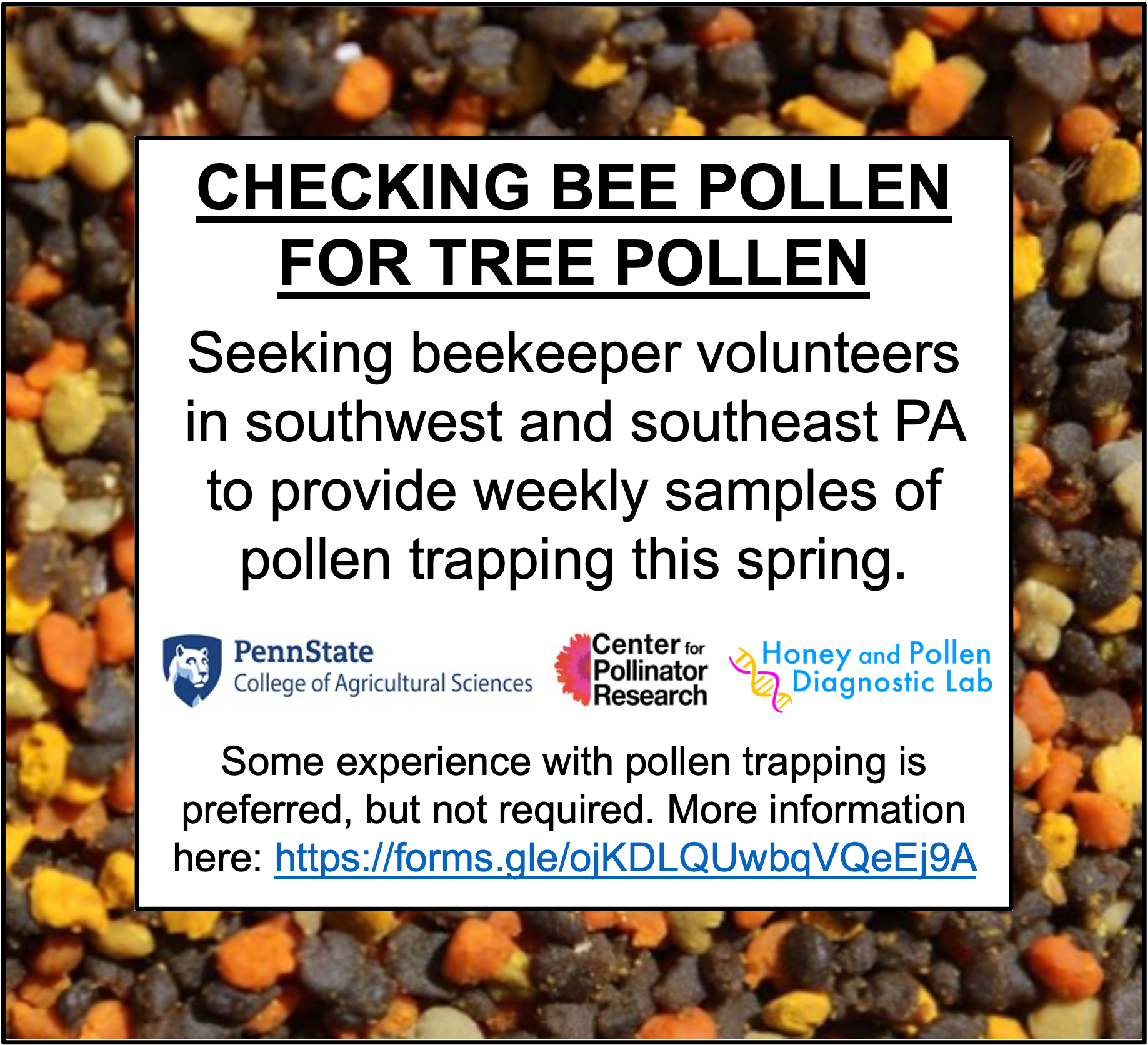
Trap Pollen for fun and science!
There’s some urgency to this opportunity. The Center for Pollinator Research at Penn State is seeking beekeeper volunteers in southeast and southwest Pennsylvania to provide weekly samples of pollen trapping from March to late May (~12 weeks). Your honey bee pollen will help us understand the role of tree pollen in providing early spring honey…
-
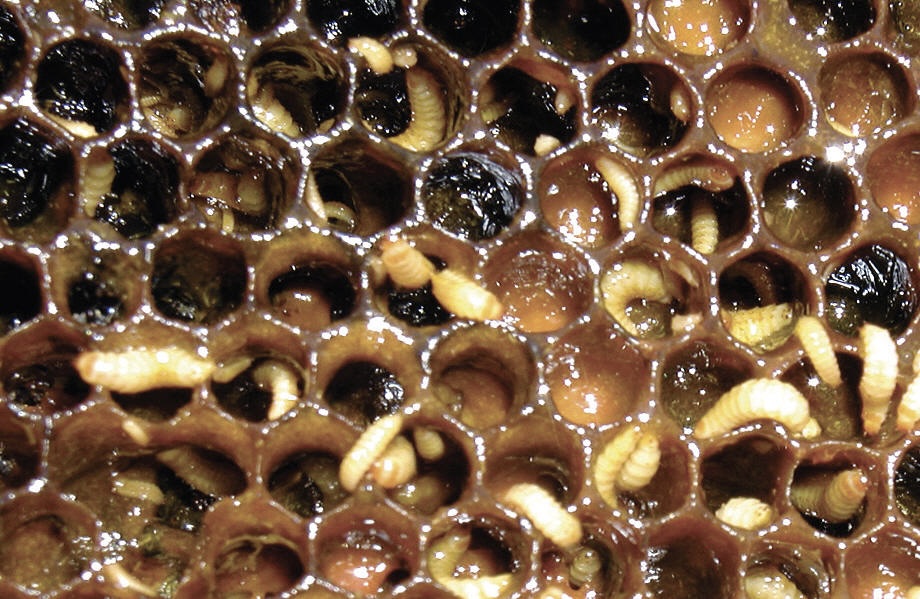
Small Hive Beetles (Aethina tumida): What’s in (and around) your hive?
A few years ago, when I opened a hive for inspection, I was greeted by slimy, smelly honey and brood frames. Adult small hive beetles (SHBs) were scurrying across the inner cover and on the frames headed for deeper darker places in the hive. Fast moving larvae were wiggling in and out of cells on…
-

Robyn Underwood – November Monthly Meeting
Well it took me long enough to post, but here’s the recording of our November Meeting featuring Robyn Underwood. Robyn covers bee anatomy in great detail. As usual there’s lots of excellent questions and commentary from the Guild community. Dang it! It looks like you’ve been bushwacked! This content is for members only. If you…
-
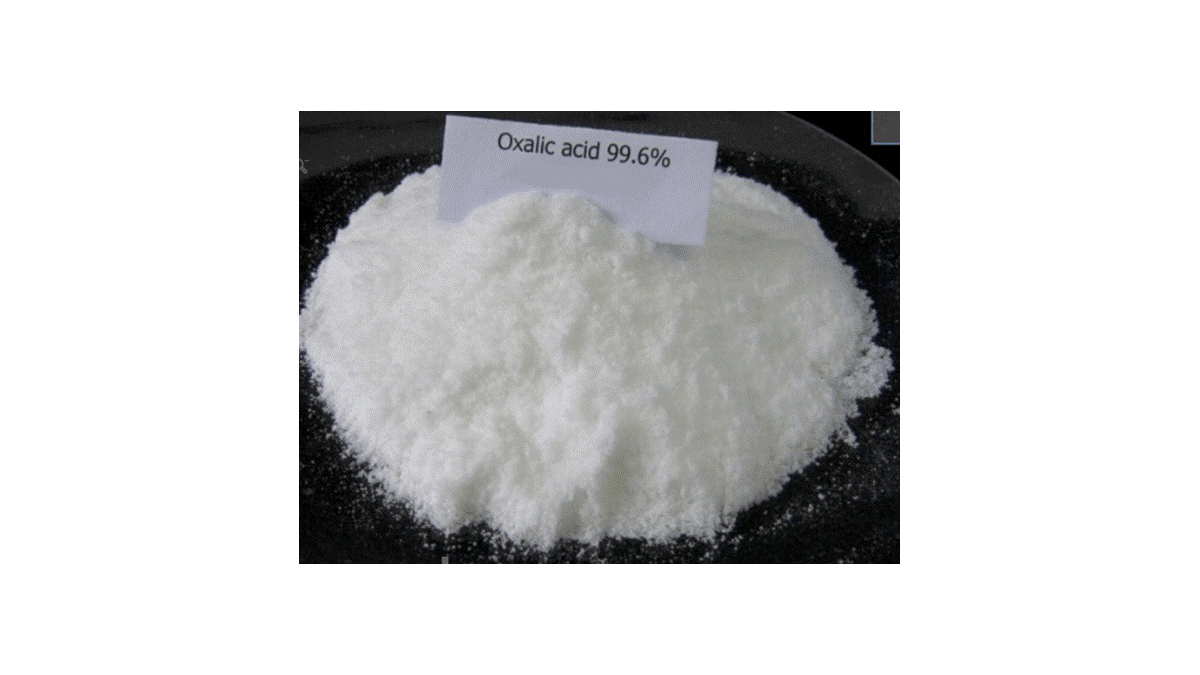
Oxalic Acid in the crisp autumn breeze
Oxalic acid can be a very effective mite treatment during the winter brood break. Oxalic is a relatively well tolerated treatment and when the mites are all outside of capped cells, as they are during the winter brood break, it can be nearly 100% effective. So, is my brood broken? Well, different bees will stop…
-

We were on the morning show!
It was a beautiful Tuesday morning in the bee yard (or apiary) when Drew and Jared from Fox29 met us to have a look at the bees for the Good Day Philadelphia morning show. Eric, Aleicia and Dave showed up to talk with them and show them around a colony and discuss some of the…
-
Piping
There’s an interesting discussion on Bee-L about piping (if you don’t know Bee-L you should check it out). In 1964 Harald Esch wrote the following: Harald Esch, 1964: Novices that follow the dancing bees can stop the dancers by eliciting a “Piep-Laut” (piping). A dancer which has already been accepted is attacked if it doesn’t…