
The first time I came to Philadelphia it was July and I thought this place is too damn hot! I had already lived in Phoenix so that’s saying something.
Right now we’re going through one of our frequent summer heatwaves (thanks climate change) but it’s always been hot from time to time in the summer here in Philadelphia. It helps a lot that we have a so many trees, two big rivers, and a bunch of creeks. Those trees also happen to be the best source of nutrition for our bees but apart from that, how do bees survive in this weather? And how are you supposed to work your bees in a heavy bee suit and 90-100 degrees of fahrenheit?
It’s all about the water
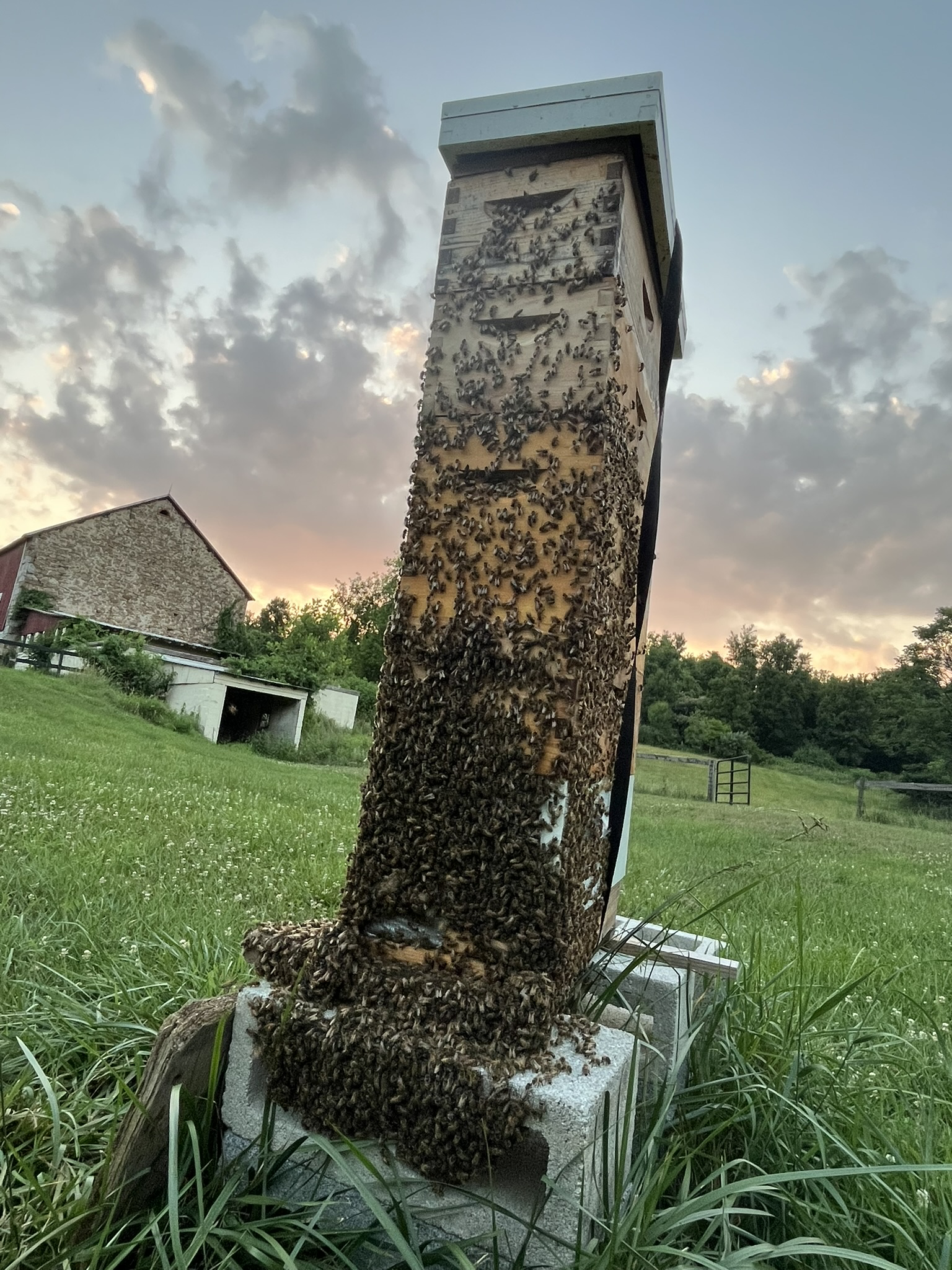
Water is essential to bees all year but when the temps get above 93 or so it’s critical. That’s the internal temperature that the colony needs to maintain for their brood. No brood no colony, so it’s pretty important. The primary strategy bees use to maintain an internal temperature of 93 even when it’s hotter than that outside is ventilation and evaporation. They bring water into the hive and then they circulate the air in there to evaporate and cool. They also get the heck out and hang out on the outside as you can see in the picture above. This is called bearding and it’s common to see in this kind of weather. Most of those bees hanging out are the nurse bees that would normally be inside the hive.
As long as your hives have a ready source of water, like one of those rivers or creeks, they can manage almost anything nature throws at them. If they don’t have a natural source they’ll use whatever they can find. If that’s your neighbor’s swimming pool or hot tub get ready for some, ahem, heated conversations.
As a beekeeper you can provide them water with a sprinkler or other steady source. I have a wall near my bees that I keep wet with a soaker hose that’s on a timer. Every hour they get 20 minutes or so of water and that keeps things wet all day. Just remember that they need to be able to land near the water in order to drink. Wet surfaces and mud are better for them than standing water.
You can also offset your boxes by a half inch or so to provide more ventilation. That’s not so great when the thunderstorms hit but if you have covers that provide a little bit of extra cover they won’t get washed out.
The melting temperature of wax is over 140° F so it needs to get a little hotter still do melt the comb, but I’ve heard of it happening.
What about the poor beekeeper?
Your bees may be a little or even a lot more aggressive in the heat, especially if they can’t find water easily. It’s not unusual for normally calm and gentle bees to sting the heck out of you if it’s really hot and their needs for water are not being met. I realize after many stings the other day that my timer set up wasn’t compensating for the long days and the bees were going for hours in the middle of the day without much water. I haven’t tried to work them as hard since but in general everyone is calmer with more water.
The best thing to do is leave them alone if you can, but sometimes you must bother them, so what are some ways to do it without suffering heat stroke.
In this super hot weather a ventilated, full body bee suit is your best friend. Ventilated suits have several layers of thick mesh fabric that puts your delicate skin out of the reach of their stingers. Be careful that your nose doesn’t press up against the veil though because they will find it. You can wear a swim suit or nothing at all under your ventilated suit and stay fairly cool, even in brutal temperatures. Of course, don’t forget your sweat band. Or your socks and shoes. But everything else is optional under there.
Wearable fans can be helpful. I’ve heard that the construction workers in Japan have t-shirts with built in fans but I couldn’t find one on Amazon. They do a lot of smart things in Japan from what I can tell. Kei trucks.
They sound like they would be uncomfortable but ice vests can be very helpful. They’re very basic nylon vests with pockets that hold six or eight freezer packs. You do need to wear a shirt under them, but if it’s over 100° F out they don’t feel cold on your skin.
And of course STAY HYDRATED! Do I even have to mention hydration in this day and age? I’ve found that adding electrolytes to my water makes a big difference but the most important thing is to drink a lot of water. You can actually drink water through your veil, which is good because sometimes in the hottest part of the summer when the colonies are at their biggest you don’t want to be around them without a veil.
Thanks for reading this post. I hope it’s helped. Let us know in the comments below your tried and true tricks for surviving the heat.